Closed Terrariums
Understanding the delicate biogeochemical equilibrium of permanently sealed terrestrial environments.
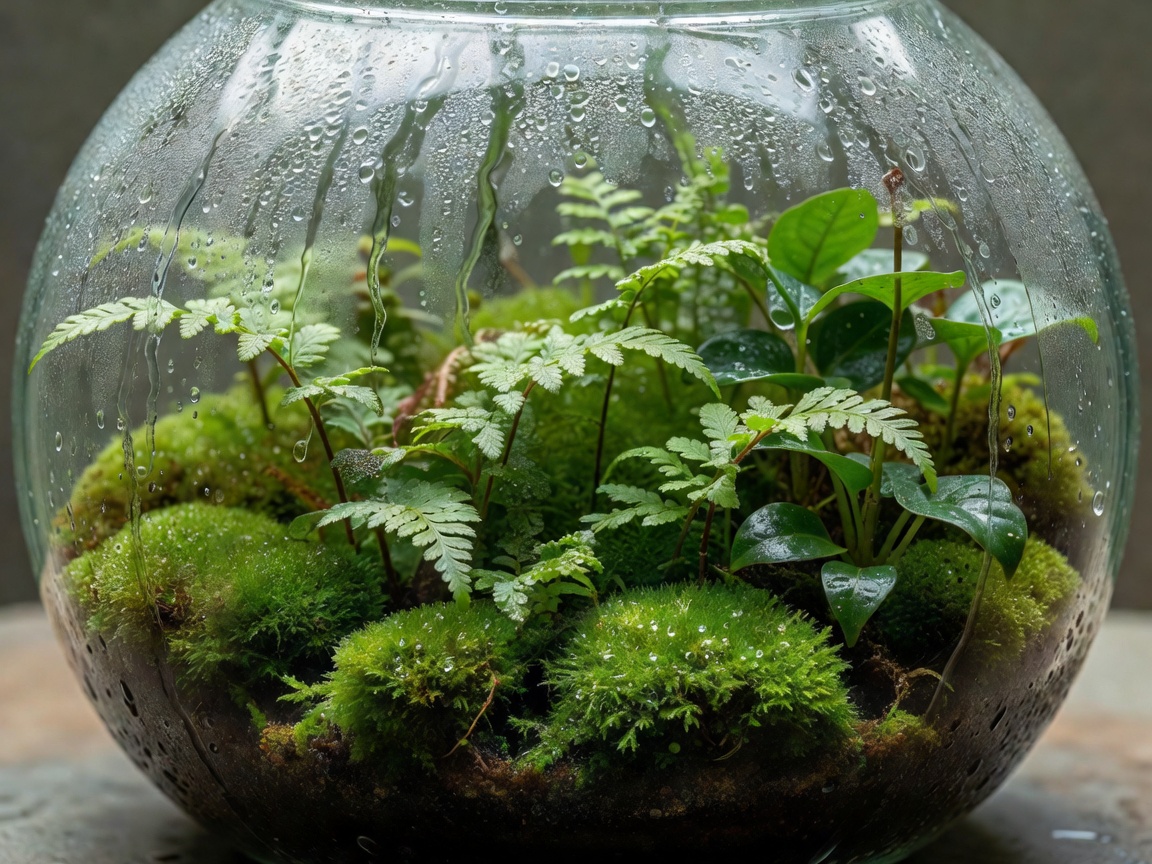
The Science of Sealed Environments
A closed terrarium is a functional ecosystem trapped behind glass. It is entirely isolated from external atmospheric exchange, relying solely on internal processes and the external input of light. In these extreme tiny ecosystems, the fundamental biogeochemical cycles—specifically the carbon, water, and nutrient cycles—must operate flawlessly for long-term survival.
During the day, photosynthesis utilizes ambient light and internal carbon dioxide to produce oxygen and carbohydrates. At night, the process reverses through cellular respiration, where the plants and micro-fauna consume oxygen and release carbon dioxide back into the sealed atmosphere. The water cycle is driven by transpiration from the plant leaves; moisture condenses on the cooler glass walls and "rains" back down into the substrate, ensuring continuous hydration without external watering.
Substrate Architecture
The foundation of a successful closed ecosystem is its substrate layering. Unlike standard potted plants, closed systems have no drainage holes. Excess water must be managed mechanically within the limited space.
- Drainage Layer (False Bottom): Commonly constructed from coarse gravel, LECA (Lightweight Expanded Clay Aggregate), or crushed volcanic rock. This layer acts as a reservoir for excess water, keeping it away from plant roots to prevent rot.
- Barrier Mesh: A synthetic screen that separates the drainage layer from the upper substrates, preventing soil from washing down and clogging the reservoir.
- Filtration Layer: Typically horticultural activated charcoal. It binds impurities, reduces toxic build-up, and mitigates odors generated by anaerobic bacterial processes.
- Nutrient Substrate: A custom soil blend optimized for tropical environments. A common mixture includes sphagnum moss, coco coir, orchid bark, and worm castings, providing a balance of moisture retention and aeration.
Flora and Micro-Fauna Selection
Not all plants can survive in an environment of 90%+ continuous humidity. Species selection dictates the long-term viability of the setup. High-humidity loving, slow-growing plants are mandatory. Common selections include varieties of Fittonia, small ferns (such as the Lemon Button fern), and various species of Ficus pumila.
However, plant life alone cannot sustain a closed system; detritivores are essential. Springtails (Collembola) and dwarf isopods function as the primary cleanup crew. They consume decaying plant matter, fungal growth, and mold, converting it into bio-available nutrients that return to the soil. Without this micro-fauna, mold quickly overtakes the humid environment, outcompeting the flora and leading to ecosystem collapse.
Common Challenges and Mitigation
The primary reason extreme tiny ecosystems fail is human interference—specifically, overwatering during the initial setup. Because moisture never escapes, introducing too much water initially will saturate the substrate, drown the micro-fauna, and rot the roots. The ecosystem should exhibit slight condensation on the glass during the morning and evening, but the glass should clear during the day. If the glass is permanently obscured by heavy water droplets, the system is too wet and must be vented temporarily.
Lighting must also be strictly controlled. Placing a closed glass vessel in direct sunlight turns it into a solar oven, rapidly elevating internal temperatures and neutralizing all organic life within hours. Bright, indirect light or full-spectrum LED lighting provides the energy needed for photosynthesis without generating lethal thermal load.